Golden Spike is a long way out. The road there runs through empty country and it starts working on you well before the visitor centre appears, which is part of why it lands - you arrive already somewhere else.
For how remote it is, it is remarkably well kept, and that shows up in small things rather than grand ones. The outside of the visitor centre. The audience area laid out around the trains. Viewing platforms built tall enough that you can actually see into the cabs. Even the road and the signage are looked after, old and weathered as they are.
Per vehicle, good for seven days. Free if you have an America the Beautiful pass, and there is a $35 annual pass for this park alone. No cash - card only.
More if you drive the auto tours, and the auto tours are half the reason to be there.
Time it for the trains
The thing that surprised me was the re-enactment of the two locomotives meeting. I expected to look at some trains. What you actually get is the whole production around them, and it is genuinely good fun.
It also runs longer than I expected. A ranger tells the story while it plays out behind her, and a couple of the cast speak their parts. Between them come the long pauses where the locomotives back away and then roll in again with bells and whistles and steam.
The part nobody mentions is how used to cameras they are. They tell you where to stand, and they tell you when the good bits are coming, right down to the whistle. If you are filming, that is worth more than any advice I could give you.
They photograph the spectators recreating the original 1869 photograph, and you come away with a copy of it. I still have mine.
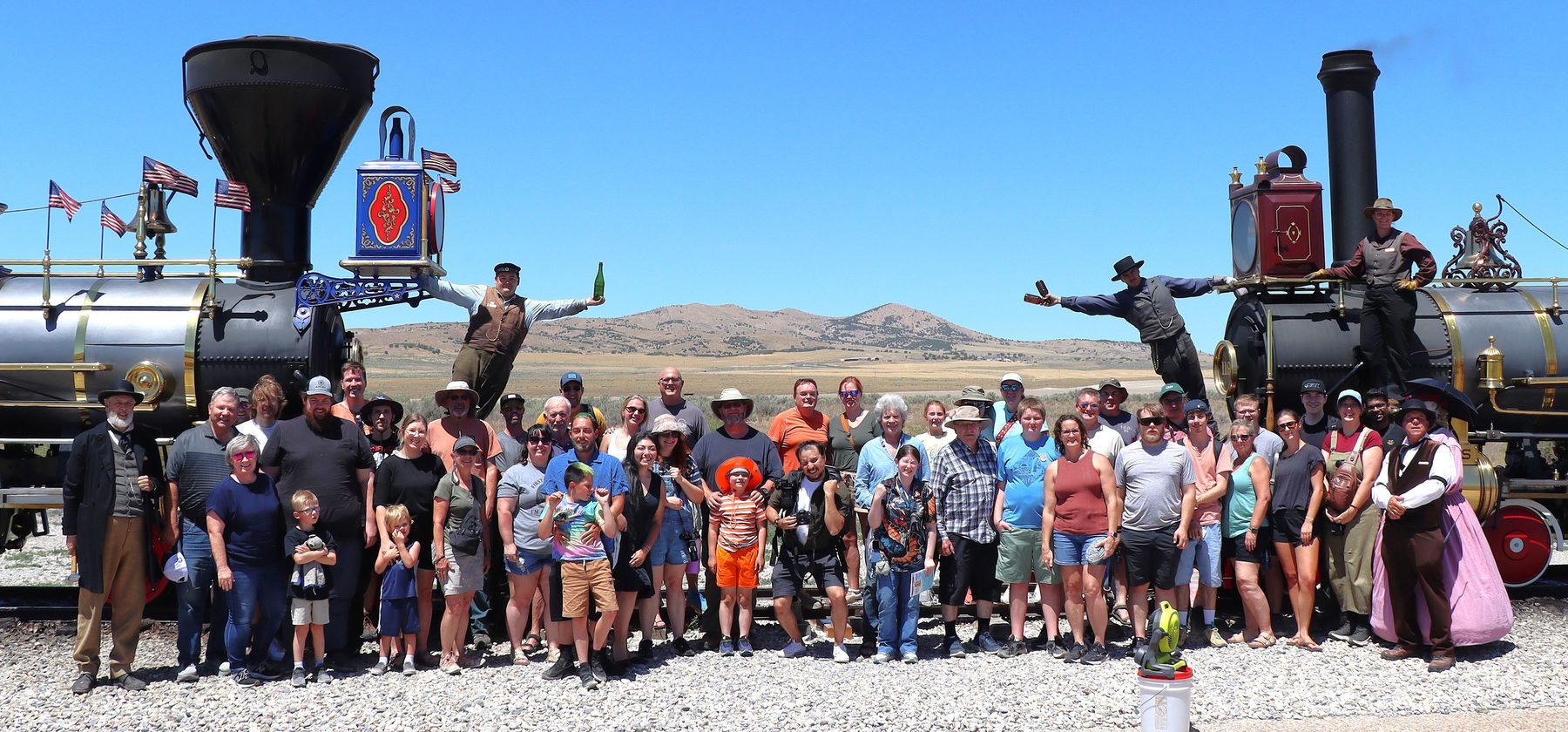
The staff are great and the re-enactors are phenomenal, which is not a small thing an hour from anywhere.
The auto tours are the other half
We did the short one, near the north entrance, and it was the other reason to go. It is empty out there - properly empty, nobody around - which is exactly the sort of thing we go looking for.
The surface is easy. It is well maintained gravel and most cars would manage it without drama. Expect a lot of dust, and expect to hear a stone come up now and then.
There are real formations along the way, including an arch marked as a point of interest on the auto tour map. It is easy to find - there is a semi-official parking area and an obvious path up to it.
Getting up to the arch is another matter. There are several patches of loose rock to pick your way across, so if you are not sure footed, look at it from the bottom rather than finding out halfway up.
No RVs and no trailers on either tour.
Who I would send
Everyone, with different instructions. If you like history, time your visit for the trains and do not leave it to chance. If you have children with you, go and see the train. If you would rather explore than be shown, add the auto tours and give yourself room to wander.
The drive out is a real part of it, and it is ordinary paved road rather than anything technical. The gravel starts at the auto tours.